The Basics
- FHA loan limits are 65% of conventional limits, up to 150% in high-cost areas
- VA loans have no limit with full entitlement; partial entitlement uses conventional limits
- USDA set loan limits at 80% of FHA limits starting March 2023
- High-cost areas may raise limits to 150% of the national level if home values are high
About This Reference Guide
Find current mortgage loan limits for your area and see how they've changed over time. This guide covers conventional, FHA, VA, and USDA loan limits for every U.S. county, with historical data going back to 1980. Use it to see what you can borrow, compare different loan types, and understand how limits have evolved.
2026 National Loan Limits
| Property Type | Conventional Loan Limit | FHA Loan Limit | VA Loan Limit | USDA Loan Limit |
|---|---|---|---|---|
| 1-Unit | $832,750 | $541,287 | $832,750 | $433,020 |
| 2-Unit | $1,066,250 | $693,050 | $1,066,250 | Ineligible |
| 3-Unit | $1,288,800 | $837,700 | $1,288,800 | Ineligible |
| 4-Unit | $1,601,750 | $1,041,125 | $1,601,750 | Ineligible |
Find Loan Limits by State
Click on any state to see county-level loan limits and explore detailed information for your area.
Alabama
Alaska
Arizona
Arkansas
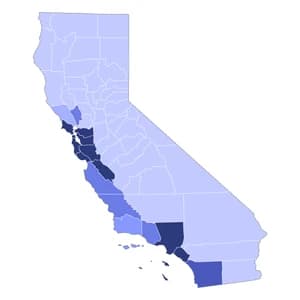
California
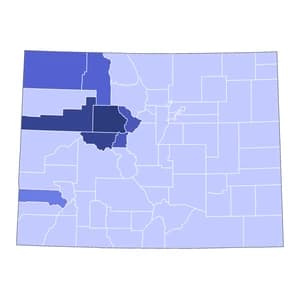
Colorado
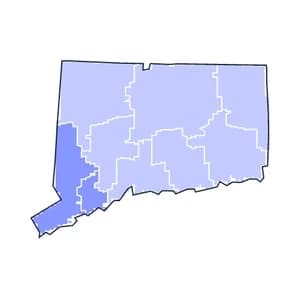
Connecticut
Delaware
District of Columbia

Florida
Georgia
Hawaii
Idaho
Illinois
Indiana
Iowa
Kansas
Kentucky
Louisiana
Maine
Maryland
Massachusetts
Michigan
Minnesota
Mississippi
Missouri
Montana
Nebraska
Nevada
New Hampshire
New Jersey
New Mexico
New York
North Carolina
North Dakota
Ohio
Oklahoma
Oregon
Pennsylvania
Rhode Island
South Carolina
South Dakota
Tennessee
Texas
Utah
Vermont
Virginia
Washington
West Virginia
Wisconsin
Wyoming
What Are Mortgage Loan Limits?
Mortgage loan limits are the maximum amounts U.S. government agencies support for different home loan types. They're based on rules that are reviewed annually, usually in late-November.
Loan limits vary by property location and property type. For home buyers and refinancing households who want to borrow more than what local loan limits allow, jumbo loans may be available.
How Different Loan Types Work
Conventional Mortgages
Conventional mortgages are the most common loan type among U.S. borrowers. They're backed by Fannie Mae or Freddie Mac, and the FHFA sets their loan limits annually. Conventional mortgage limits vary by location. In high-cost areas, conventional mortgage borrowers can exceed the national mortgage loan limits by up to 150%.
FHA Mortgages
FHA mortgages are mortgages insured by the Federal Housing Administration. FHA mortgages are generally more permissive, allowing lower credit scores and household income compared to other loan types. By law, the FHA sets its standard FHA loan limit at 65% of the conventional mortgage loan limit, allowing increases up to 150% in designated high-cost areas.
VA Mortgages
VA mortgages are mortgages available to veterans and service members, backed by the Department of Veterans Affairs as part of a comprehensive veterans benefits package. VA mortgages use the same mortgage loans limits as conventional mortgages, however, they only apply to borrowers with partial entitlement. VA home buyers with full entitlement do not have loan limits.
USDA Mortgages
USDA mortgages are mortgages backed by the U.S. Department of Agriculture. They're available for one-unit homes only, and are restricted to non-urban areas which includes rural parts of the country and many suburbs. The USDA didn't use mortgage loan limits until 2023.
📊 Key Statistic
How Loan Limits Have Changed Over Time
Historical Trends Chart
National Loan Limits History
Note: Chart shows national minimum loan limits by year. VA limits started in 2006. USDA limits started in 2023 and are only available for 1-unit properties.
A History Of Mortgage Loan Limits (1972-Present)
Mortgage loan limits have evolved to match home buyer needs through the last 50 years. In 1972, conventional mortgage loan limits started at just $33,000. Today, they are $806,500 . This is a 24-fold increase which reflects both inflation and the growing cost of housing in the United States. Loan limits now vary by location and property type and, in high-cost areas, Fannie Mae and Freddie Mac support mortgage loan sizes up to 150% of the national baseline amount.
The Federal Housing Administration introduced FHA loan limits in 2008, setting them at 65% of conventional limits. FHA calculates its loan limits as a percentage of the annual conforming loan limit amounts set by the FHFA, which is 65% for the floor limit in low-cost areas and 150% for the ceiling limit in high-cost areas.
Before 1998, FHA loan limits were not tied to conventional limits and were often significantly lower. FHA was primarily a "starter loan" program for buyers of low-cost homes only. In 1998, though, after research linked high loan limits with better homeowner outcomes, Congress established the first numerical relationship between FHA loan limit and conventional limits, setting FHA limits at 48% of Fannie Mae and Freddie Mac figures.
Then, in 2008, the Housing and Economic Recovery Act (HERA) introduced the modern FHA structure which, for the first time, made FHA mortgages viable for buyers in high-cost areas. Today, FHA loan limits start at 65% of conventional mortgage limits and range up to 150% higher.
At the Department of Veterans Affairs, mortgage loan limits were first introduced in 2006 and mirror conventional loans limits exactly. VA loan limits apply only to borrowers with partial entitlement. Borrowers with full entitlement do not have a loan limit and may borrow any amount a lender approves. Partial entitlement usually happens when a VA loan is still active or a portion of entitlement was used and not restored.
USDA loans operated without formal loan size limits before 2023. The maximum loan amount was naturally limited by household income caps, debt-to-income rules, and property value requirements. On March 1, 2023, USDA began enforcing official loan size limits for the first time, setting them at 80% of FHA loan limits for each county. This change applied only to the USDA Guaranteed Loan Program and was designed to align USDA loan caps with broader market norms.
Complete Historical Data Table (1972-Present)
| Year | Conventional | FHA | VA | USDA |
|---|---|---|---|---|
| 2026 | $832,750 | $541,287 | $832,750 | $433,020 |
| 2025 | $806,500 | $524,225 | $806,500 | $419,300 |
| 2024 | $766,550 | $498,257 | $766,550 | $398,606 |
| 2023 | $726,200 | $472,030 | $726,200 | $377,624 |
| 2022 | $647,200 | $420,680 | $647,200 | - |
| 2021 | $548,250 | $356,362 | $548,250 | - |
| 2020 | $510,400 | $331,760 | $510,400 | - |
| 2019 | $484,350 | $314,827 | $484,350 | - |
| 2018 | $453,100 | $294,515 | $453,100 | - |
| 2017 | $424,100 | $275,665 | $424,100 | - |
| 2016 | $417,000 | $271,050 | $417,000 | - |
| 2015 | $417,000 | $271,050 | $417,000 | - |
| 2014 | $417,000 | $271,050 | $417,000 | - |
| 2013 | $417,000 | $271,050 | $417,000 | - |
| 2012 | $417,000 | $271,050 | $417,000 | - |
| 2011 | $417,000 | $271,050 | $417,000 | - |
| 2010 | $417,000 | $271,050 | $417,000 | - |
| 2009 | $417,000 | $271,050 | $417,000 | - |
| 2008 | $417,000 | $200,160 | $417,000 | - |
Note: Table shows national minimum loan limits by year. VA limits started in 2006. USDA limits started in 2023 and are only available for 1-unit properties.
High-Cost Area Loan Limits
High-cost areas are counties, cities, or parishes where median home values are higher than the national average, so those areas get access to elevated mortgage loan limits.
The high-cost designation was established under the Housing and Economic Recovery Act (HERA) of 2008, which lets loan limits keep pace with local prices of homes. With larger limits in place, home buyers can use government-backed mortgages when, previously, they may have been relegated to jumbo loans or products with ultra-large down payments.
How High-Cost Areas Are Determined
The Federal Housing Finance Agency (FHFA) reviews home values in every U.S. county each year to decide which areas qualify for higher loan limits. The agency uses median home price data from local market sources such as Multiple Listing Services, county assessor records, and market reports. When a county's median home value is 15% or more above the conforming mortgage loan limit, that area is designated "high-cost".
Loan limits can be increased up to 50% above the national level.
Maximum Loan Limits by Type in High-Cost Areas
| Loan Type | High-Cost Area Maximum Loan Limit |
|---|---|
| Conventional | Up to 50% above the national conforming loan limit |
| FHA | Up to 50% above the national FHA loan limit |
| VA | Up to 50% above the national conforming loan limit |
| USDA | No increase — remains at standard limit |
Frequently Asked Questions About Mortgage Loan Limits
Get answers to common questions about mortgage loan limits, how they work, and how they affect your home buying options. We are not a lender and cannot guarantee loan approval or specific terms.